Women in the Media:
Mapping the Patterns of Workplace Harassment in Slovenia, Croatia, Serbia and Bosnia and Herzegovina

A COMPARATIVE OVERVIEW 

This publication represents the first systematic, joint effort by journalist unions, professional associations, and media organisations in BiH, Serbia, Slovenia and Croatia to examine the working conditions for women in media, and to expose an interconnected cycle of violence they experience on a daily basis.


This report moves beyond anecdotal evidence to demonstrate that workplace violence in media is real – it is not incidental, but structural.

UNDERREPORTED WORKPLACE VIOLENCE

Abuse, violence and misconduct in media workplaces remain significantly underreported due to stigma, social sanctioning, and lack of sensitization regarding what constitutes discrimination, violence and abuse. A lack of trust in the effectiveness or impartiality of post-reporting procedures emerged as one of the main reasons women decide not to report violations of their workplace rights.

UNSTABLE AND DISCRIMINATORY LABOUR SYSTEM

The core failure is not the absence of rules but the absence of credible enforcement of laws within an unstable and discriminatory labour system. Precarious employment arrangements are widespread, especially in Serbia and Bosnia and Herzegovina, with non-credible mechanisms for protection against harassment and violence and weak reporting mechanisms.

WEAK PROTECTION MECHANISMS

Protection mechanisms are widely described as “existing on paper only,” lacking preventive measures, gender-sensitive design, staff training, or credible enforcement procedures. Low trust in internal procedures, fear of retaliation, and lack of follow-up result in minimal resolution and limited confidence in outcomes.

HARMFUL ORGANISATIONAL CULTURES

Newsrooms are frequently described as toxic environments in which discriminatory practices, everyday sexism, and harassment are normalized. Hierarchical power relations dominated by men shape newsroom cultures in which silence becomes rational and reporting risky.

MENTAL HEALTH STRAIN

Burnout is reported to be at epidemic levels due to understaffing, chronic exposure to harassment and discrimination, and excessive workloads, all compounded by women’s multiple social and family roles. However, due to lack of mental health support systems and persistent stigma, women are discouraged from recognizing and admitting mental health challenges.

The lack of trust in the effectiveness or impartiality of procedures after reporting is one of the main reasons behind women’s decision not to report violations of their rights in the workplace
The regional survey sample included 606 women working in media across all target countries. Diversity was ensured in relation to age, employment status, and the type and ownership or organisational category of media outlets in which respondents were employed.

Sexual Harassment And Gender-Based Violence 

Sexual harassment and gender-based violence constitute core forms of discrimination and human rights violations in the media sector. Under the Istanbul Convention34, “violence against women” is understood as a violation of human rights and a form of discrimination against women, encompassing all acts of gender-based violence that result in, or are likely to result in, physical, sexual, psychological, or economic harm or suffering to women. The Convention further defines “gender-based violence against women” as violence that is directed against a woman because she is a woman or that affects women disproportionately. Sexual harassment, in turn, is defined as any form of unwanted verbal, non-verbal or physical conduct of a sexual nature, with the purpose or effect of violating the dignity of a person, in particular when creating an intimidating, hostile, degrading, humiliating, or offensive environment.

These legal definitions provide the normative framework for interpreting the research findings of this study. Across the four countries, the prevalence of gender-based violence and sexual harassment among women journalists is both widespread and systemic.

The majority of survey participants (78.38%) indicated that they had experienced some form of gender-based violence. This includes gender-based attacks and threats, discrediting treatment based on gender, verbal and non-verbal forms of sexual harassment, and physical harassment, including sexual violence. These findings show that sexual harassment is not an isolated or marginal phenomenon in the media sector, but rather a structural risk embedded within professional cultures, power relations, and institutional practices that shape women journalists’ everyday working environments.

The number and proportion of survey participants, by country in the region

Age distribution of respondents across the region, by age brackets

Rulebook

Rulebook is currently in preparation and coming soon — stay tuned.

About Women in the Media

Read More Arrow Outward

Gender-based violence remains a challenge within society, significantly rooted in gender inequality and exacerbated by unequal power relations. The project directly aligns with the European Commission’s 2020 – 2025 Gender Equality Strategy, which emphasizes the need for freedom from violence and stereotypes. It specifically addresses the call CERV-2024-DAPHNE, which seeks to prevent and combat gender-based violence. By focusing on the media sector, the project tackles a crucial area where such violence is present.

However, although the issue of gender-based violence against women at media workplace is a global issue, and it is also present in Slovenia, Croatia, Serbia and Bosnia and Herzegovina, data to support the claim, and consequently monitor the improvement of the situation, is rather scarce.

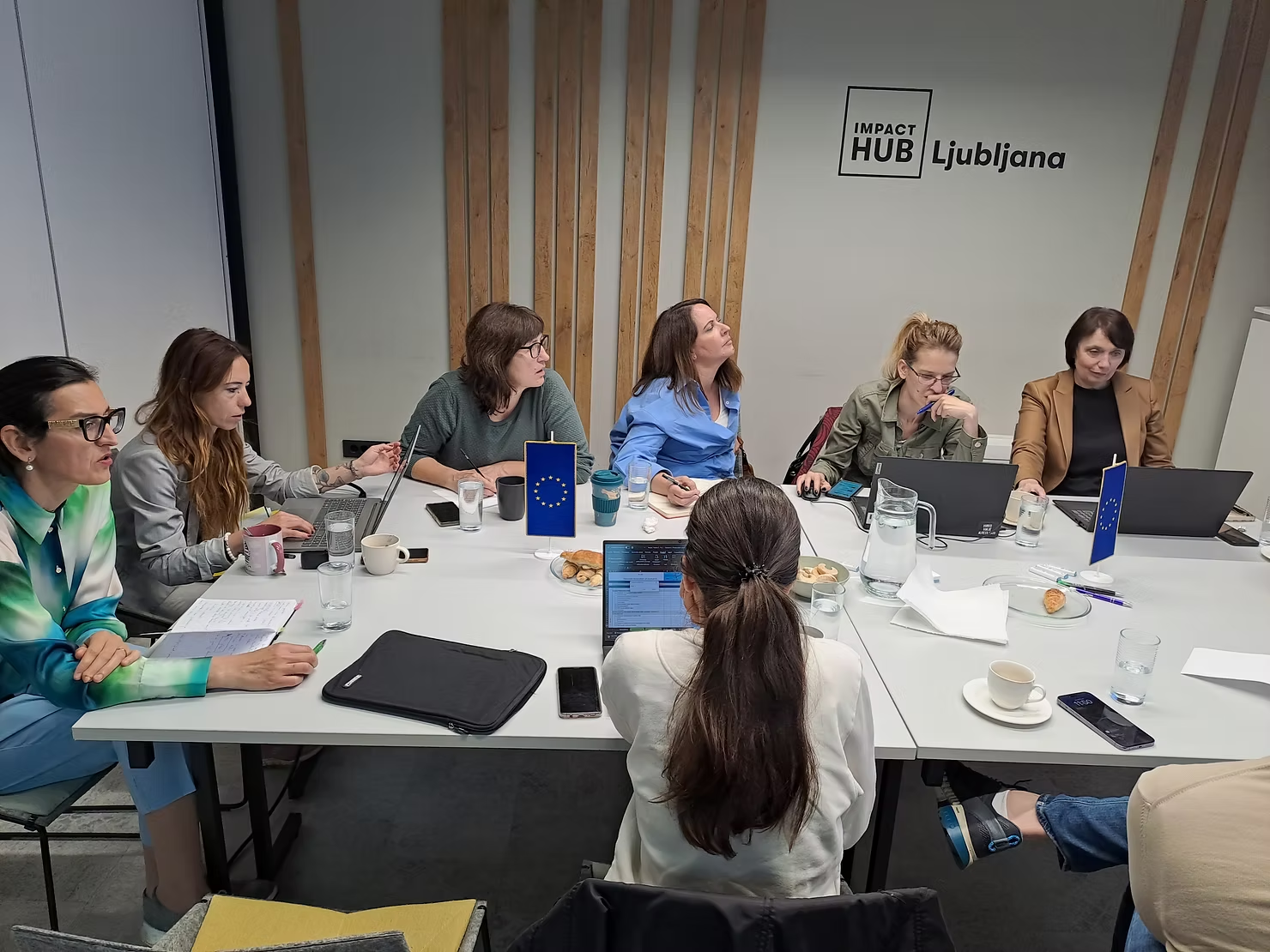
This is why five partners Zavod Krog (Slovenia), Trade Union of Croatian Journalists, TUCJ (Croatia), Trade Union of Culture, Art and Media “Nezavisnost” (Serbia), Mediacentar Sarajevo (BiH) and Slovenian Association of Journalists, SAJ (Slovenia) with co-financing of the European Union started with the project »Women in the Media«.